Centaurea macrocephala
TAXONOMIE
FamilleAsteraceae
GenreCentaurea
Zone4
APPRENDRE ENCORE PLUS
Plants of the World OnlineÀ PROPOS
Centaurea macrocephala, commonly known as the Bighead Knapweed or Armenian Basketflower, is a perennial plant in the Asteraceae family. Native to the Caucasus region, it is known for its large, bright yellow flower heads. The plant prefers temperate climates and can grow up to 1.5 meters tall. It has a dormancy period during the winter months.
AUSSI CONNU SOUS LE NOM
Bighead Knapweed
Phaeopappus Macrocephalus
Grossheimia macrocephala
APERÇU
VPDCalculer
EauHumide
SolLimoneux
LumièreLumière directe (6 Heures)
Température20° C
Humidité50
Dormance3 Mois
pH6,5
Pression1 013
DÉTAILS
Instructions d'entretien
Centaurea macrocephala thrives in bright, direct sunlight and moderate temperatures. It prefers moderate humidity levels and should be watered when the soil partially dries out. The plant is relatively easy to care for but does require some attention to its light and water needs.Sol
This plant prefers well-draining loamy soil. It can tolerate a range of soil types but performs best in soil that retains some moisture without becoming waterlogged. Good drainage is essential to prevent root rot.Engrais
A balanced fertilizer with an N-P-K ratio of 10-10-10 is suitable for Centaurea macrocephala. Fertilize the plant during the growing season, typically in spring and summer, to promote healthy growth and flowering.Rempotage
Repotting is generally not necessary for Centaurea macrocephala as it is typically grown outdoors. However, if grown in a container, repot every 2-3 years to refresh the soil and provide more space for root growth.Propagation
Centaurea macrocephala can be propagated by seeds or division. The best time to propagate by division is in early spring or late autumn. For seed propagation, sow seeds in a well-draining seed mix and keep them moist until germination.Taille
Pruning is beneficial for Centaurea macrocephala to remove spent flowers and encourage new growth. Prune in late summer after the flowering period to maintain the plant's shape and health.Toxicité
Centaurea macrocephala is not known to be toxic to pets or humans. However, as with all plants, it is advisable to prevent pets and children from ingesting any part of the plant.Supplémentaire
Centaurea macrocephala is a hardy plant that can tolerate a range of conditions once established. It is also known to attract pollinators such as bees and butterflies, making it a great addition to a pollinator-friendly garden.RÉVOLUTIONNEZ LE SOIN DE VOS PLANTES
Rendre Chaque Plante Intelligente
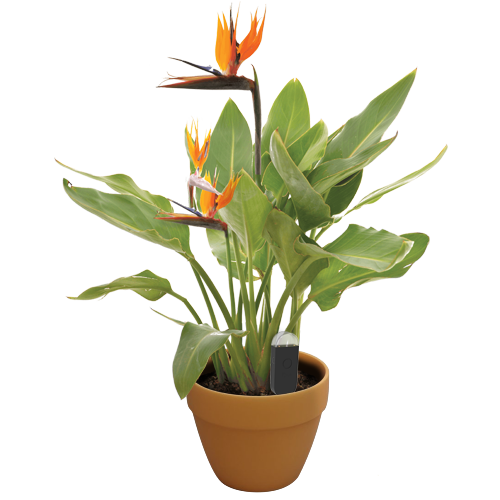
Moniteur d'usine
RESTE DANS VOTRE USINE
Mesure avec précision les paramètres de base de votre plante – humidité du sol, lumière, température et humidité – ainsi que des paramètres composés tels que le déficit de pression de vapeur (VPD) et les degrés-jours de croissance (GDD).
Achetez maintenant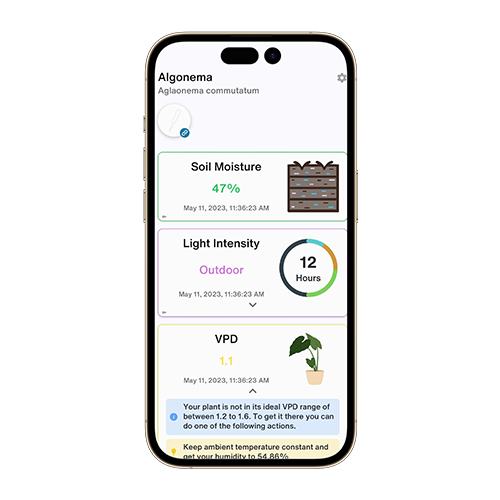
Application mobile
TÉLÉCHARGEZ SUR VOTRE APPAREIL
Évalue les données de vos plantes, la météo actuelle, la saisonnalité et plus encore pour vous informer avec précision des besoins de vos plantes. L'application est également dotée de nombreuses fonctionnalités supplémentaires pour garantir l'épanouissement de vos plantes.