Dischidia platyphylla
TAXONOMIE
FamilleApocynaceae
GenreDischidia
Zone10
APPRENDRE ENCORE PLUS
Plants of the World OnlineÀ PROPOS
Dischidia platyphylla, commonly known as the 'Flat-leafed Dischidia,' is a climbing subshrub native to wet tropical climates. It belongs to the Apocynaceae family and the Dischidia genus. This plant is known for its unique flat leaves and is often found growing on trees in its natural habitat.
AUSSI CONNU SOUS LE NOM
Watermelon dischidia
APERÇU
VPDCalculer
EauMouillé
SolLimoneux
LumièreLumineux indirect (6 Heures)
Température25° C
Humidité70
pH6
Pression1 013
DÉTAILS
Instructions d'entretien
Dischidia platyphylla thrives in bright, indirect light and prefers moderate temperatures. It requires high humidity and should be kept in a humid environment. Water the plant regularly to keep the soil evenly moist but not waterlogged. Avoid direct sunlight as it can scorch the leaves.Sol
This plant prefers a well-draining loam soil mix. Ensure the soil retains some moisture but does not become waterlogged. A mix of orchid bark, perlite, and peat moss can provide the right balance of drainage and moisture retention.Engrais
Use a balanced fertilizer with a nutrient composition of 2-1-2. Fertilize the plant every 4-6 weeks during the growing season. Avoid over-fertilizing as it can harm the plant.Rempotage
Repot Dischidia platyphylla every 1-2 years or when it outgrows its current pot. Choose a slightly larger pot with good drainage. Gently remove the plant from its old pot, shake off excess soil, and place it in the new pot with fresh soil mix.Propagation
Propagate Dischidia platyphylla through stem cuttings. Take cuttings with at least two nodes and place them in a moist, well-draining soil mix. Keep the cuttings in a warm, humid environment until they root.Taille
Prune the plant to maintain its shape and encourage bushier growth. Remove any dead or yellowing leaves and trim back any overly long stems. Pruning can be done throughout the growing season.Toxicité
Dischidia platyphylla is not known to be toxic to pets or humans. However, it is always a good practice to keep plants out of reach of pets and children to avoid any accidental ingestion.Supplémentaire
Dischidia platyphylla can be grown both indoors and outdoors, making it a versatile plant for various environments. Ensure it receives adequate humidity, especially when grown indoors, by misting the plant or using a humidity tray.RÉVOLUTIONNEZ LE SOIN DE VOS PLANTES
Rendre Chaque Plante Intelligente
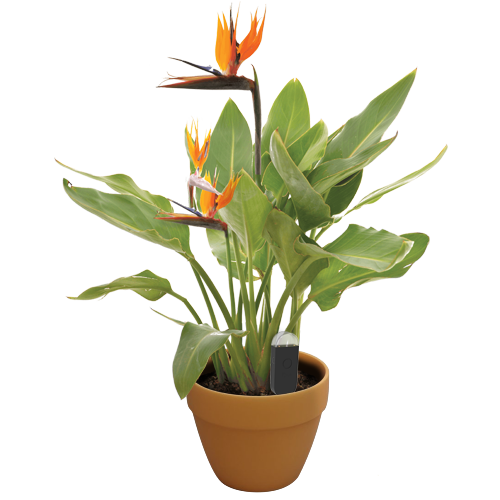
Moniteur d'usine
RESTE DANS VOTRE USINE
Mesure avec précision les paramètres de base de votre plante – humidité du sol, lumière, température et humidité – ainsi que des paramètres composés tels que le déficit de pression de vapeur (VPD) et les degrés-jours de croissance (GDD).
Achetez maintenant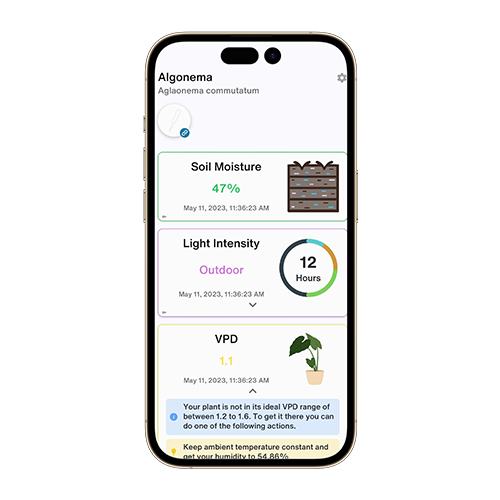
Application mobile
TÉLÉCHARGEZ SUR VOTRE APPAREIL
Évalue les données de vos plantes, la météo actuelle, la saisonnalité et plus encore pour vous informer avec précision des besoins de vos plantes. L'application est également dotée de nombreuses fonctionnalités supplémentaires pour garantir l'épanouissement de vos plantes.