Elaeagnus commutata
TAXONOMIE
FamilleElaeagnaceae
GenreElaeagnus
Zone3
APPRENDRE ENCORE PLUS
Plants of the World OnlineÀ PROPOS
Elaeagnus commutata, commonly known as Silverberry or Wolf-willow, is a deciduous shrub or small tree native to North America. It is known for its silvery leaves and fragrant yellow flowers. This plant is well-adapted to temperate climates and can tolerate a range of soil conditions, including poor soils. It has a dormancy period during the winter months.
AUSSI CONNU SOUS LE NOM
American Silver-Berry
Silverberry
Wolf-Willow
Elaeagnus argentea
Elaeagnus argentea subsp. pauciflora
Elaeagnus argentea subsp. rotundifolia
Elaeagnus argentea subsp. sinuosa
Elaeagnus argentea var. elongata
Elaeagnus argentea var. maxima
Elaeagnus glabra
Elaeagnus veteris-castelli
APERÇU
VPDCalculer
EauSec
SolLimoneux
LumièreLumière directe (6 Heures)
Température15° C
Humidité50
Dormance4 Mois
pH6,5
Pression1 013
DÉTAILS
Instructions d'entretien
Silverberry prefers full sun and can tolerate a range of temperatures, thriving best in moderate climates. It requires moderate watering, allowing the soil to dry out between waterings. The plant does well in average humidity levels and can withstand some drought once established.Sol
Silverberry prefers well-draining loamy soil but can tolerate a variety of soil types, including sandy and clay soils. It is important to ensure good drainage to prevent root rot. The plant can thrive in nutrient-poor soils but benefits from occasional fertilization.Engrais
Use a balanced fertilizer with an N-P-K ratio of 10-10-10. Fertilize in early spring and again in mid-summer to support growth and flowering. Avoid over-fertilizing as this can lead to excessive foliage growth at the expense of flowers.Rempotage
Repotting is generally not necessary for Silverberry as it is typically grown outdoors. However, if grown in a container, repot every 2-3 years to refresh the soil and provide more space for root growth. Repot in early spring before new growth begins.Propagation
Silverberry can be propagated by seeds, cuttings, or suckers. Seeds should be sown in the fall or stratified before spring planting. Softwood cuttings can be taken in early summer, while suckers can be separated from the parent plant in early spring or fall.Taille
Pruning is recommended to maintain the shape and health of the plant. Prune in late winter or early spring before new growth starts. Remove any dead, damaged, or diseased branches, and thin out crowded areas to improve air circulation.Toxicité
Silverberry is not known to be toxic to pets or humans. However, as with any plant, it is advisable to prevent pets and children from ingesting any part of the plant.Supplémentaire
Silverberry is a hardy plant that can be used for erosion control and as a windbreak. It is also beneficial for wildlife, providing food and shelter for birds and other animals. The plant can fix nitrogen in the soil, improving soil fertility.RÉVOLUTIONNEZ LE SOIN DE VOS PLANTES
Rendre Chaque Plante Intelligente
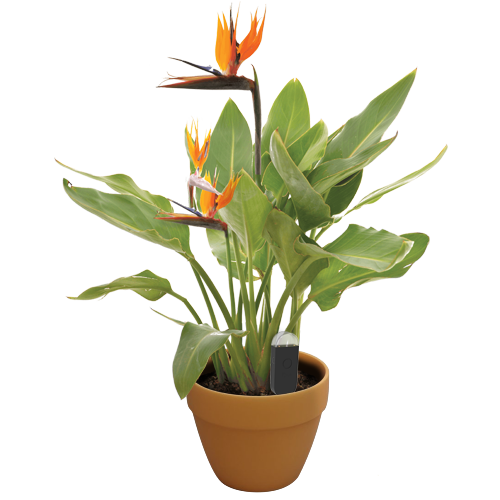
Moniteur d'usine
RESTE DANS VOTRE USINE
Mesure avec précision les paramètres de base de votre plante – humidité du sol, lumière, température et humidité – ainsi que des paramètres composés tels que le déficit de pression de vapeur (VPD) et les degrés-jours de croissance (GDD).
Achetez maintenant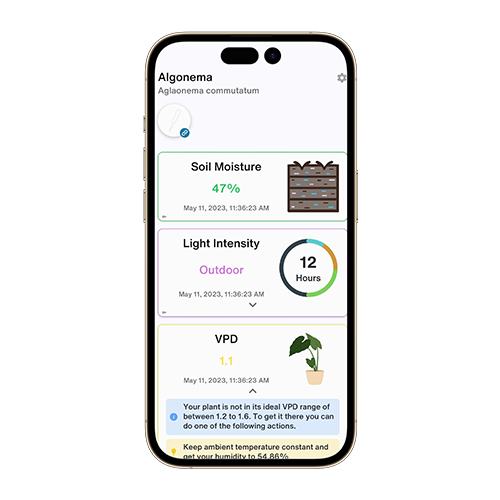
Application mobile
TÉLÉCHARGEZ SUR VOTRE APPAREIL
Évalue les données de vos plantes, la météo actuelle, la saisonnalité et plus encore pour vous informer avec précision des besoins de vos plantes. L'application est également dotée de nombreuses fonctionnalités supplémentaires pour garantir l'épanouissement de vos plantes.