Solandra maxima
TAXONOMIE
FamilleSolanaceae
GenreSolandra
Zone10
APPRENDRE ENCORE PLUS
Plants of the World OnlineÀ PROPOS
Solandra maxima, commonly known as Cup of Gold Vine or Golden Chalice Vine, is a scrambling shrub native to seasonally dry tropical climates. It belongs to the Solanaceae family and is known for its large, fragrant, trumpet-shaped flowers. The plant can grow vigorously and is often used as an ornamental plant in gardens and landscapes.
AUSSI CONNU SOUS LE NOM
Chalice Cup Vine
Cup Of Gold
Golden Chalice Vine
Hawaiian Lilly
Datura maxima
Solandra grandiflora var. nitida
Solandra hartwegii
Solandra nitida
Solandra selerae
Swartzia nitida
APERÇU
VPDCalculer
EauSec
SolLimoneux
LumièreLumière directe (6 Heures)
Température25° C
Humidité60
Dormance2 Mois
pH6,5
Pression1 013
DÉTAILS
Instructions d'entretien
Solandra maxima thrives in bright, direct sunlight and prefers warm temperatures. It requires moderate humidity and should be watered when the soil is almost completely dry. The plant can tolerate some drought but performs best with regular watering during the growing season. It is best suited for outdoor growth in tropical or subtropical climates.Sol
This plant prefers well-draining loamy soil. It can tolerate a range of soil types but performs best in soil that retains some moisture without becoming waterlogged. Good drainage is essential to prevent root rot.Engrais
Solandra maxima benefits from a balanced fertilizer with an N-P-K ratio of 10-10-10. Fertilize the plant during the growing season, typically every 4-6 weeks, to promote healthy growth and flowering.Rempotage
Repot Solandra maxima when it outgrows its current container, usually every 2-3 years. Choose a slightly larger pot with good drainage, and use a well-draining potting mix. Repotting is best done in the spring before the growing season begins.Propagation
Propagate Solandra maxima through stem cuttings. Take cuttings in the spring or early summer, and root them in a well-draining potting mix. Keep the cuttings in a warm, humid environment until they establish roots.Taille
Prune Solandra maxima to control its size and shape, and to remove any dead or damaged growth. Pruning is best done after the flowering period. Regular pruning encourages bushier growth and more abundant flowering.Toxicité
Solandra maxima is toxic to pets and humans. All parts of the plant contain toxic alkaloids that can cause symptoms such as nausea, vomiting, and diarrhea if ingested. Handle the plant with care and keep it out of reach of children and pets.Supplémentaire
Solandra maxima can be trained to grow on trellises or arbors, making it a versatile addition to gardens. Its large, fragrant flowers attract pollinators such as bees and butterflies, adding to its appeal as an ornamental plant.RÉVOLUTIONNEZ LE SOIN DE VOS PLANTES
Rendre Chaque Plante Intelligente
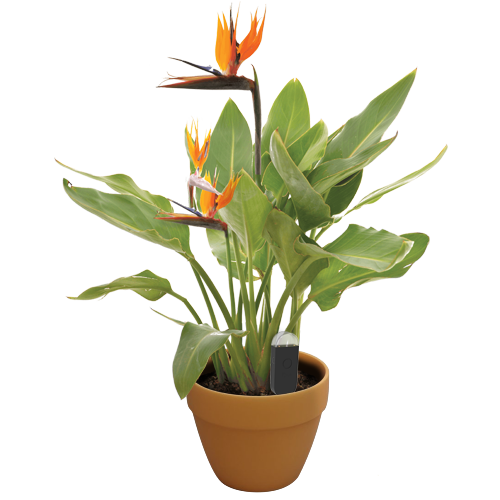
Moniteur d'usine
RESTE DANS VOTRE USINE
Mesure avec précision les paramètres de base de votre plante – humidité du sol, lumière, température et humidité – ainsi que des paramètres composés tels que le déficit de pression de vapeur (VPD) et les degrés-jours de croissance (GDD).
Achetez maintenant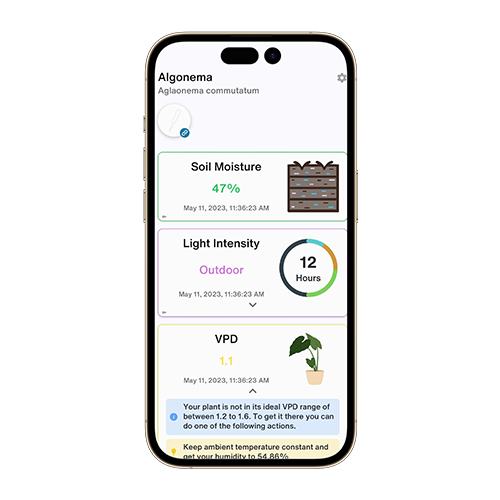
Application mobile
TÉLÉCHARGEZ SUR VOTRE APPAREIL
Évalue les données de vos plantes, la météo actuelle, la saisonnalité et plus encore pour vous informer avec précision des besoins de vos plantes. L'application est également dotée de nombreuses fonctionnalités supplémentaires pour garantir l'épanouissement de vos plantes.