Urtica urens
TAXONOMIE
FamilleUrticaceae
GenreUrtica
Zone4
APPRENDRE ENCORE PLUS
Plants of the World OnlineÀ PROPOS
Urtica urens, commonly known as annual nettle or small nettle, is a member of the Urticaceae family. It is native to Europe but has spread to many temperate regions around the world. This annual plant is known for its stinging hairs that can cause skin irritation. It typically grows in disturbed soils and can be found in gardens, fields, and along roadsides.
AUSSI CONNU SOUS LE NOM
Burning Nettle
Dwarf Nettle
Stinging Nettle
Urtica atlantica
Urtica cubensis
Urtica ovalifolia
Urtica parvula
Urtica quadristipulata
Urtica trianae
APERÇU
DÉTAILS
Instructions d'entretien
Urtica urens prefers moderate temperatures and medium light conditions. It thrives in environments with consistent moisture and moderate humidity. Regular watering is essential to keep the soil evenly moist. The plant can tolerate a range of temperatures but prefers temperate climates.Sol
The plant prefers loamy soil that is well-draining. It can tolerate a range of soil pH levels but thrives best in slightly acidic to neutral soils. Ensure the soil remains consistently moist but not waterlogged.Engrais
A balanced fertilizer with an N-P-K ratio of 10-10-10 can be applied during the growing season to support healthy growth. Fertilize every 4-6 weeks for optimal results.Rempotage
As an annual plant, Urtica urens does not typically require repotting. However, if grown in containers, ensure the pot is large enough to accommodate its root system and repot if the plant becomes root-bound.Propagation
Urtica urens can be propagated by seeds. Sow the seeds in early spring directly into the soil or in seed trays. Keep the soil moist until germination, which usually occurs within 1-2 weeks.Taille
Pruning is not generally required for Urtica urens. However, removing any dead or damaged leaves can help maintain the plant's appearance and health.Toxicité
Urtica urens is known for its stinging hairs that can cause skin irritation and a burning sensation upon contact. The plant is toxic to pets and humans if ingested, causing symptoms such as nausea and vomiting.RÉVOLUTIONNEZ LE SOIN DE VOS PLANTES
Rendre Chaque Plante Intelligente
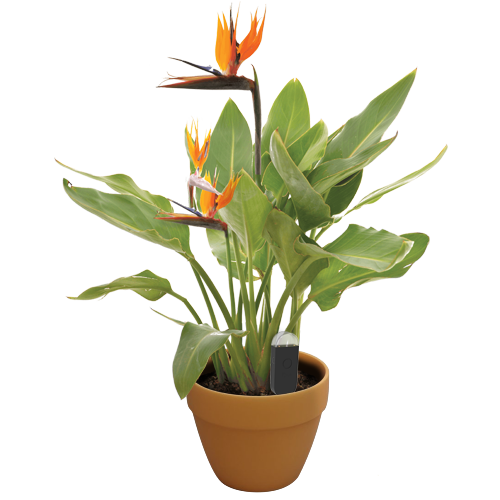
Moniteur d'usine
RESTE DANS VOTRE USINE
Mesure avec précision les paramètres de base de votre plante – humidité du sol, lumière, température et humidité – ainsi que des paramètres composés tels que le déficit de pression de vapeur (VPD) et les degrés-jours de croissance (GDD).
Achetez maintenant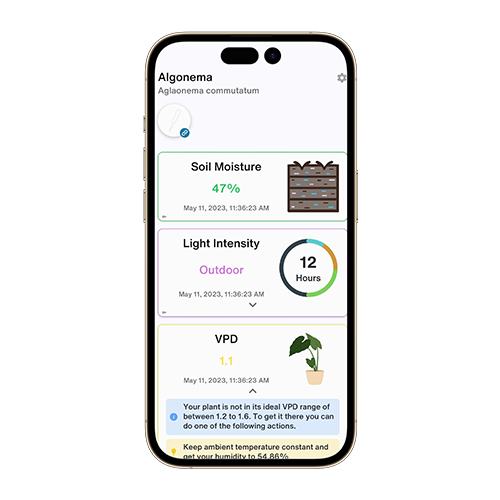
Application mobile
TÉLÉCHARGEZ SUR VOTRE APPAREIL
Évalue les données de vos plantes, la météo actuelle, la saisonnalité et plus encore pour vous informer avec précision des besoins de vos plantes. L'application est également dotée de nombreuses fonctionnalités supplémentaires pour garantir l'épanouissement de vos plantes.