Gleditsia triacanthos
TAXONOMY
FamilyFabaceae
GenusGleditsia
Zone4
LEARN MORE
Plants of the World OnlineABOUT
Gleditsia triacanthos, commonly known as the honey locust, is a deciduous tree native to central North America. It belongs to the Fabaceae family and can grow up to 30 meters tall. The tree is known for its long, compound leaves and distinctive thorns. It is often used in landscaping and urban environments due to its tolerance to pollution and poor soil conditions.
ALSO KNOWN AS
Acacia Americana
Acacia Villaregalis
Caesalpiniodes Heterophylla
Caesalpiniodes Triacanthum
Honey Locust
Jumping Cassie
Melilobus Heterophyla
Suckers
Sucking Cassie
Vachellia Villaregalis
Acacia inermis
Acacia laevis
Acacia triacanthos
Gleditschia triacanthos
Gleditsia brachycarpa
Gleditsia brachycarpos
Gleditsia bujotii
Gleditsia bujotii var. pendula
Gleditsia elegans
Gleditsia ferox
Gleditsia ferox var. nana
Gleditsia flava
Gleditsia heterophylla
Gleditsia inermis
Gleditsia inermis var. elegantissima
Gleditsia laevis
Gleditsia latifolia
Gleditsia latisiliqua
Gleditsia latisilique
Gleditsia meliloba
Gleditsia micracantha
Gleditsia polysperma
Gleditsia sinensis var. nana
Gleditsia spinosa
Gleditsia triacanthos f. elegantissima
Gleditsia triacanthos f. inermis
Gleditsia triacanthos f. nana
Gleditsia triacanthos f. pendula
Gleditsia triacanthos var. brachycarpos
Gleditsia triacanthos var. bujotii
Gleditsia triacanthos var. horrida
Gleditsia triacanthos var. inermis
Gleditsia triacanthos var. laevis
Gleditsia triacanthos var. macrocarpos
Gleditsia triacanthos var. nana
Gleditsia triacanthos var. polysperma
Gleditsia triacanthus
OVERVIEW
VPDCalculate
WaterDry
SoilLoamy
LightDirect Bright (6 Hours)
Temperature20° C
Humidity50%
Dormancy3 Months
pH6.5
Pressure1,013 mbar
DETAILS
Care Instructions
Honey locust trees thrive in temperate climates and prefer full sun exposure. They are relatively drought-tolerant once established and can handle a range of soil conditions. Regular watering is needed during the growth stage, but the soil should be allowed to dry out between waterings. Moderate temperatures and average humidity levels are ideal for this plant.Soil
Gleditsia triacanthos prefers well-draining loamy soil but can tolerate a variety of soil types, including clay and sandy soils. Good drainage is essential to prevent root rot. The soil should be kept moderately fertile to support healthy growth.Fertilizer
Honey locust trees generally do not require regular fertilization. However, if the soil is particularly poor, a balanced fertilizer can be applied in the early spring to support new growth. Avoid over-fertilizing as it can lead to excessive foliage at the expense of root development.Repotting
As a large tree, Gleditsia triacanthos is not typically repotted. Instead, it should be planted in a suitable outdoor location where it has ample space to grow. Ensure the planting site has good drainage and enough room for the tree's extensive root system.Propagation
Honey locust trees can be propagated from seeds or cuttings. Seeds should be scarified and soaked in water before planting to improve germination rates. Cuttings can be taken from young, healthy branches and rooted in a well-draining soil mix. Propagation is best done in the spring or early summer.Pruning
Pruning is essential for maintaining the shape and health of the honey locust tree. Prune in late winter or early spring before new growth begins. Remove any dead, damaged, or diseased branches, and thin out crowded areas to improve air circulation. Be cautious of the tree's thorns when pruning.Toxicity
Gleditsia triacanthos is not known to be toxic to pets or humans. However, the tree's thorns can cause physical injury, so care should be taken when handling or working near the tree.Additional
Honey locust trees are valued for their ability to fix nitrogen in the soil, which can improve soil fertility. They are also resistant to many pests and diseases, making them a low-maintenance choice for landscaping. The tree's open canopy allows sunlight to reach the ground, supporting the growth of understory plants.REVOLUTIONIZE YOUR PLANT CARE
Make Every Plant Smart
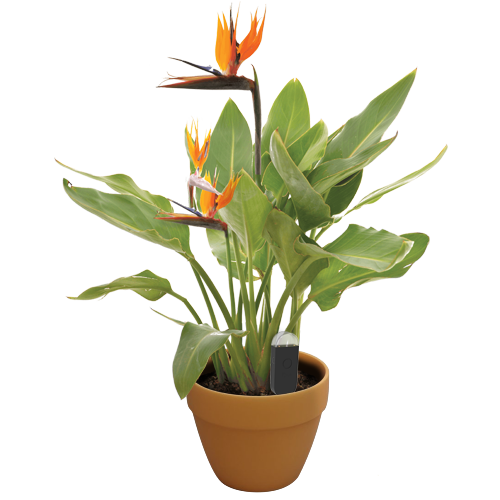
Plant Monitor
STAYS IN YOUR PLANT
Accurately measures the core metrics of your plant – soil moisture, light, temperature and humidity - as well as compound metrics such as Vapor Pressure Deficit (VPD) and Growing Degree Days (GDD).
Shop Now