Aquilegia canadensis
TAXONOMIE
FamilieRanunculaceae
GattungAquilegia
Zone3
MEHR ERFAHREN
Plants of the World OnlineUM
Aquilegia canadensis, commonly known as the Eastern Red Columbine or Wild Columbine, is a perennial herbaceous plant native to North America. It is known for its distinctive red and yellow flowers that attract hummingbirds and bees. The plant typically goes dormant in the winter months.
AUCH BEKANNT ALS
Eastern Red Columbine
Meeting-Houses
Red Columbine
Wild Columbine
Aquilegia australis
Aquilegia canadensis f. albiflora
Aquilegia canadensis f. ecalcarata
Aquilegia canadensis f. flaviflora
Aquilegia canadensis f. gartneri
Aquilegia canadensis f. phippenii
Aquilegia canadensis subsp. americana
Aquilegia canadensis var. aurea
Aquilegia canadensis var. australis
Aquilegia canadensis var. canadensis
Aquilegia canadensis var. coccinea
Aquilegia canadensis var. eminens
Aquilegia canadensis var. flaviflora
Aquilegia canadensis var. hybrida
Aquilegia canadensis var. latiuscula
Aquilegia canadensis var. longistyla
Aquilegia canadensis var. phippenii
Aquilegia canadensis var. vera
Aquilegia canadensis var. violacea
Aquilegia coccinea
Aquilegia elegans
Aquilegia eminens
Aquilegia flaviflora
Aquilegia latiuscula
Aquilegia phoenicantha
Aquilegia variegata
ÜBERBLICK
VPDBerechnung
WasserFeucht
BodenLehmig
LichtIndirekt hell (6 Std)
Temperatur20° C
Feuchtigkeit50
Ruhezustand3 Monate
PH6,5
Druck1.013
EINZELHEITEN
Pflegehinweise
Aquilegia canadensis thrives in moderate temperatures and prefers bright, indirect light. It should be watered regularly but allowed to dry out partially between waterings. The plant enjoys moderate humidity and can adapt to various indoor and outdoor environments.Boden
This plant prefers well-draining loamy soil with a slightly acidic to neutral pH. It can tolerate a range of soil types but performs best in soil that retains some moisture without becoming waterlogged.Dünger
Use a balanced fertilizer with a nutrient composition of 5-10-5. Fertilize the plant in the spring and summer months to support its growth and flowering. Avoid over-fertilizing as it can harm the plant.Umtopfen
Repot Aquilegia canadensis every 2-3 years or when it outgrows its current pot. Choose a pot that is slightly larger than the current one and ensure it has good drainage. Repotting is best done in the early spring before new growth begins.Vermehrung
Propagate by seed or division. Seeds can be sown in the fall or early spring, while division is best done in the spring. Ensure the new divisions have adequate roots and plant them in well-prepared soil.Beschneidung
Prune the plant after flowering to remove spent blooms and encourage new growth. Cut back any dead or damaged foliage to maintain the plant's health and appearance.Toxizität
Aquilegia canadensis is generally non-toxic to pets and humans. However, it is always best to keep plants out of reach of pets and children to avoid any potential issues.Zusätzlich
Aquilegia canadensis is a low-maintenance plant that can add a splash of color to gardens and attract pollinators. It is also deer-resistant, making it a good choice for areas where deer are a problem.REVOLUTIONIEREN SIE IHRE PFLANZENPFLEGE
Machen Sie Jede Pflanze Intelligent
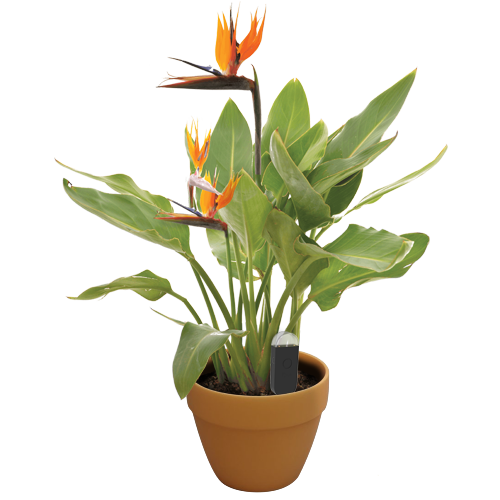
Pflanzenmonitor
BLEIBT IN IHRER ANLAGE
Misst präzise die Kernwerte Ihrer Pflanze – Bodenfeuchtigkeit, Licht, Temperatur und Luftfeuchtigkeit – sowie zusammengesetzte Werte wie Dampfdruckdefizit (VPD) und Wachstumsgradtage (GDD).
Jetzt einkaufen