Cuscuta europaea
TAXONOMIE
FamilieConvolvulaceae
GattungCuscuta
Zone6
MEHR ERFAHREN
Plants of the World OnlineUM
Cuscuta europaea, commonly known as Greater Dodder, is a holoparasitic annual plant in the family Convolvulaceae. It is native to Europe and parts of Asia. This plant lacks chlorophyll and relies entirely on its host plants for nutrients. It is often found in temperate climates and can be seen growing on a variety of host plants, including herbs and shrubs.
AUCH BEKANNT ALS
European Dodder
Cuscuta capillaris
Cuscuta europaea subsp. halophyta
Cuscuta filiformis
Cuscuta tetrandra
Cuscuta urceolata
Cuscuta viciae
Cuscuta vulgaris
ÜBERBLICK
VPDBerechnung
WasserSehr feucht
BodenLehmig
LichtDirekt hell (6 Std)
Temperatur20° C
Feuchtigkeit60
PH6,5
Druck1.013
EINZELHEITEN
Pflegehinweise
Cuscuta europaea requires direct bright light and thrives in moderate temperatures. It prefers high humidity and needs to be attached to a host plant to survive. This plant is challenging to care for due to its parasitic nature and specific requirements.Boden
Cuscuta europaea does not have specific soil requirements as it is a holoparasitic plant. However, the host plant should be grown in well-draining loam soil. The soil should be kept consistently moist to support the host plant's health.Dünger
Cuscuta europaea does not require fertilizer as it derives all its nutrients from its host plant. Ensuring the host plant is healthy and well-nourished is crucial.Umtopfen
Repotting is not applicable for Cuscuta europaea as it is a parasitic plant. Focus on maintaining the health of the host plant instead.Vermehrung
Propagation of Cuscuta europaea is typically done through seeds. The seeds should be sown near a suitable host plant in the spring. Once the seedlings emerge, they will seek out and attach to the host plant.Beschneidung
Pruning is not required for Cuscuta europaea. However, managing the growth of the host plant and removing any excessive parasitic growth may be necessary to prevent damage to the host.Toxizität
Cuscuta europaea is toxic to pets and humans. All parts of the plant contain toxic compounds that can cause gastrointestinal distress if ingested. Handle with care and keep away from children and pets.Zusätzlich
Due to its parasitic nature, Cuscuta europaea can be challenging to manage and may harm the host plant if not monitored carefully. It is often considered a weed in agricultural settings.REVOLUTIONIEREN SIE IHRE PFLANZENPFLEGE
Machen Sie Jede Pflanze Intelligent
Pflanzenmonitor
BLEIBT IN IHRER ANLAGE
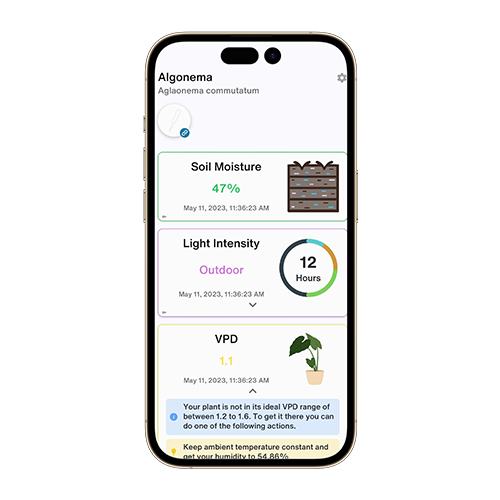
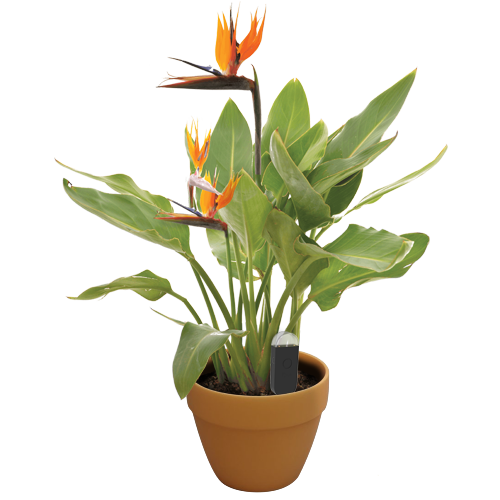
Misst präzise die Kernwerte Ihrer Pflanze – Bodenfeuchtigkeit, Licht, Temperatur und Luftfeuchtigkeit – sowie zusammengesetzte Werte wie Dampfdruckdefizit (VPD) und Wachstumsgradtage (GDD).
Jetzt einkaufen