Euryops chrysanthemoides
TAXONOMIE
FamilieAsteraceae
GattungEuryops
Zone9
MEHR ERFAHREN
Plants of the World OnlineUM
Euryops chrysanthemoides, commonly known as African Bush Daisy, is a flowering shrub native to South Africa. It belongs to the Asteraceae family and is known for its bright yellow daisy-like flowers. This plant thrives in subtropical climates and is often used in gardens for its vibrant blooms and evergreen foliage.
AUCH BEKANNT ALS
African Bush Daisy
Bull's Eye
Daisy-Bush
Gamolepis chrysanthemoides
ÜBERBLICK
VPDBerechnung
WasserTrocken
BodenLehmig
LichtDirekt hell (6 Std)
Temperatur20° C
Feuchtigkeit50
PH6,5
Druck1.013
EINZELHEITEN
Pflegehinweise
African Bush Daisy requires bright, direct sunlight for optimal growth. It prefers moderate temperatures and can tolerate some drought once established. Regular watering is necessary, but the soil should be allowed to dry out between waterings. This plant does well in moderate humidity and should be protected from frost.Boden
Euryops chrysanthemoides prefers well-draining loamy soil. It can tolerate poor soil conditions but thrives best in soil that is rich in organic matter. Good drainage is essential to prevent root rot.Dünger
A balanced fertilizer with an N-P-K ratio of 10-10-10 can be applied during the growing season to promote healthy growth and flowering. Fertilize every 4-6 weeks during the active growing period.Umtopfen
Repotting is generally not necessary for this shrub when planted outdoors. However, if grown in containers, repot every 2-3 years or when the plant outgrows its pot. Choose a slightly larger pot with good drainage and fresh potting mix.Vermehrung
Euryops chrysanthemoides can be propagated through seeds or cuttings. Take semi-hardwood cuttings in late spring or early summer and root them in a well-draining potting mix. Seeds can be sown in spring.Beschneidung
Pruning is beneficial to maintain the shape and encourage bushier growth. Prune after the flowering period by cutting back the stems to promote new growth. Remove any dead or damaged branches as needed.Toxizität
Euryops chrysanthemoides is not known to be toxic to pets or humans. However, it is always advisable to keep plants out of reach of pets and children to avoid any accidental ingestion.Zusätzlich
This plant is relatively low-maintenance and can add a splash of color to gardens and landscapes. It is also drought-tolerant once established, making it a good choice for xeriscaping.REVOLUTIONIEREN SIE IHRE PFLANZENPFLEGE
Machen Sie Jede Pflanze Intelligent
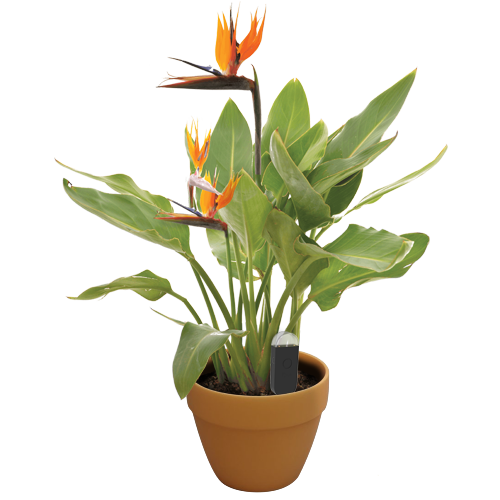
Pflanzenmonitor
BLEIBT IN IHRER ANLAGE
Misst präzise die Kernwerte Ihrer Pflanze – Bodenfeuchtigkeit, Licht, Temperatur und Luftfeuchtigkeit – sowie zusammengesetzte Werte wie Dampfdruckdefizit (VPD) und Wachstumsgradtage (GDD).
Jetzt einkaufen